Class B autoclaves and sterilization packaging: purchasing checks
Buying a sterilizer is only part of buying a working reprocessing workflow. A quotation headed “Class B autoclave” leaves open questions about the instruments you already own, the packaging they’ll go into, load documentation, maintenance and local service. What the clinic needs is a defined equipment configuration and a documented handover — not a promise that one machine purchase makes the practice compliant.
Start with the instruments that will enter the workflow: exact manufacturer and model, available reprocessing instructions, dismantling requirements, approved accessories. Then ask the equipment supplier to identify the sterilizer model and cycle documentation your responsible team will assess. Procurement supplies information and equipment; the clinic establishes and controls its own process.
Read the machine designation accurately
“Class B” is common purchasing language; manufacturers also use “Type B” for sterilizer cycles and devices. Preserve the actual designation from the selected model’s documents. A distributor’s headline is not a certificate for the clinic, and not a guarantee covering every instrument and load. Machine model, supplied configuration and intended installation each need separate confirmation.
W&H Lisa is a concrete example: a sterilizer product family with documented B-cycle options, test cycles and traceability accessories. Ask for a quotation around the exact Lisa model rather than an unspecified Lisa image — the family includes different chamber configurations. The order should name the chosen configuration, its electrical specification and the rack or tray arrangement being supplied.
A capacity headline is not a loading plan. The clinical team needs the selected model’s documented load conditions, the intended packaging and the instruments’ own instructions, collected together for review. Don’t schedule instrument availability off an advertised total cycle time before the actual load and drying arrangements have been assessed.
Component compatibility begins before sterilization
The instrument register should distinguish a handle from its straight and contra-angle attachments — that distinction drives dismantling, cleaning and maintenance requirements. A combined kit name can hide different requirements for its individual components. Ask for model-specific instructions and list every component that must be processed, maintained or replaced.

Older VectorTAS equipment shows why this detail matters. VectorTAS has separate handle, straight attachment and contra-angle components, and its reprocessing restrictions include ultrasonic cleaning exclusions, with a separate lubrication requirement for the contra-angle. Those details belong to that equipment’s compatibility record — they are not a universal cleaning rule for unrelated handpieces.
Don’t transpose an instruction from a historical document onto a newly purchased device. Obtain the current instructions for the exact device being installed, including approved lubricants and processing accessories, and keep legacy equipment as an identified legacy entry until its current support status is resolved. A new sterilizer alone answers none of those instrument questions.
Lubrication and maintenance deserve purchase lines
An approved maintenance requirement creates real purchasing objects: the specified lubricant, the application accessory, replacement parts, and whatever equipment the manufacturer’s maintenance process needs. A generic “handpiece oil included” line is inadequate in a clinic running several different devices. Identify which lubricant belongs to which device, and who approves replacements.
The service handover should separate tasks clinic staff carry out from those handled by an authorised provider. Get written confirmation of replacement-part availability, applicable service arrangements and the technical support route. Put recurring maintenance consumables into the stock system so the workflow doesn’t depend on a single bottle supplied at installation.
Record instrument restrictions in language staff can use at the processing area: the model identity, and the document version behind each restriction. A short component map beats a folder of manuals nobody can match to an unlabelled attachment — and it lets purchasing ask for the correct spare when something breaks.
Packaging is a separate system
Specify sterilization packaging by product identity, dimensions, sealing method and documented process compatibility. A pouch, a reel and a rigid container have different accessory requirements. Have the clinic’s responsible team approve the proposed packaging alongside the intended instrument loads and sterilizer documentation. “Sterile barrier bags” needs an actual named product behind it.
A pouch’s process indicator is not a complete record of an accepted load. Procurement provides the approved indicator products and record tools; the trained team defines how the process is assessed and documented. The purchase order should not claim that a colour change proves successful sterilization, or that a sealed bag carries an automatic storage period.
For heat-sealed reels, the sealer is an identifiable purchase object of its own. W&H Seal² is a named foil-sealing device; review its roll arrangement, supported packaging and service documentation together with the chosen consumables. For self-sealing pouches, verify the approved closure system and pack identity instead. A reel order with no approved sealer configuration is incomplete.
Traceability should survive a change of operator
The sterilizer’s records, labels and data-export arrangements belong in the equipment specification. Within the Lisa traceability ecosystem, W&H offers a barcode label printer and scanner. Clarify what the quoted bundle includes and what is a separate purchase; software, connection accessories and label refills all need identified ownership inside the clinic.
Ask the supplier to demonstrate retrieval of a recorded cycle at handover. The clinic should know where records live, who maintains access, and how they are preserved across equipment or staff changes. An included storage device is not a record-management plan. Purchasing can force concreteness by requiring the relevant manuals and an agreed configuration record.
A complete procurement object table
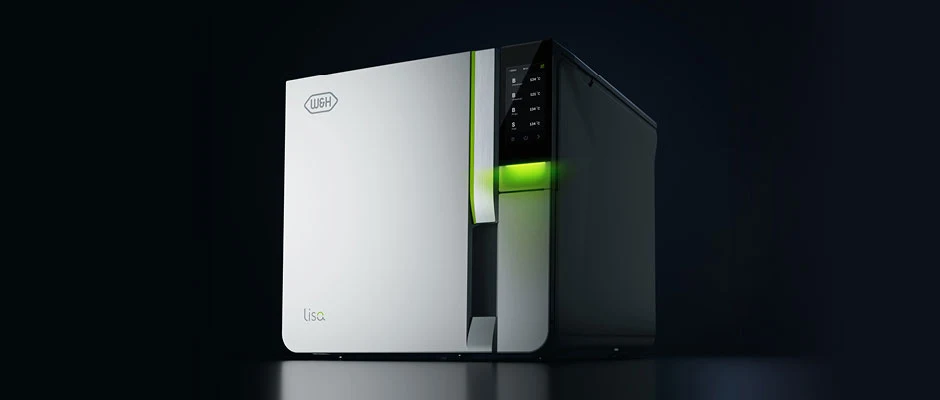
W&H Lisa sterilizer.
| Purchase object | Exact specification to obtain | Compatibility review | Receipt or handover evidence |
|---|---|---|---|
| Type B sterilizer | Manufacturer, model, chamber configuration and electrical version | Documented cycles, loads and intended instruments | Serial identity, supplied configuration and manuals |
| Instrument component | Exact handle or attachment model | Cleaning, maintenance and process restrictions | Component map linked to its instructions |
| Maintenance consumables | Named lubricant and approved application accessories | Device-specific approval | Label, expiry if applicable and storage requirements |
| Packaging | Named pouch, reel or container and dimensions | Instrument fit, sterilizer process and sealing method | Labelled unopened stock and instructions |
| Sealer | Named model such as Seal² if approved | Selected reel material and installation | Configuration and service documentation |
| Process controls | Named tests and indicators approved by the clinic | Selected machine and monitoring plan | Identifiable products with instructions |
| Traceability equipment | Printer, scanner and record configuration | Labels, connections and record access | Demonstrated record retrieval and refill identity |
Every row is an object requiring its own purchase decision. Bundles are acceptable when their content list answers the same questions. Before the final order is released, the buyer should be able to name who approved the instrument, packaging and process compatibility.
Procurement errors that create difficult handovers
The first is treating a foreign product certificate as approval of the installed workflow. Request documents relevant to the actual supplied device and the local transaction, and have the responsible person assess them. A clinic is not certified or compliant because a machine’s marketing page carries a standard designation.
The second is transferring a temperature, time or method from one instrument’s document to every load. Those are process questions tied to exact equipment and product instructions; they don’t belong in a generic procurement template. The purchase record identifies required documents and approved compatibility — operation stays with the trained team.
The third is budgeting only for the machine. Packaging, seals, indicators, labels, maintenance and servicing all create continuing costs and supply dependencies. An itemised configuration makes them visible before installation, and lets the clinic plan replenishment around the actual system instead of discovering missing consumables in its first operating week.
Quote the installed configuration, not just the sterilizer
Ask for the exact Lisa model, its supplied tray arrangement and the local electrical configuration, and return those fields beside the sterilizer line so a machine offered alone is distinguishable from a package with the requested installation accessories. Obtain the relevant load and cycle documentation for that model. “Class B” on a quotation identifies neither every supplied feature nor the clinic’s local purchasing requirements.
Packaging carries its own specification: the approved pouch or roll product, and the widths the clinic’s instrument packs require. For rolls, identify the sealer separately — a machine plus a roll is an incomplete pairing when the sealing equipment has been omitted. Ask the sealer supplier to confirm compatibility with the named packaging, and keep that statement with the equipment record.
Traceability needs itemising too. Does the proposed package include the requested record output, printer connection and label supplies? Record what is supplied and what is optional, and give printer consumables their own reorder references. An advertised record function has little purchasing value if the offered configuration omits the hardware or consumable needed to produce the record.
Handover should expose unresolved equipment questions
Check the sterilizer’s model plate and serial identity against the quotation, and reconcile trays, supplied accessories and documentation before arranging equipment acceptance. Installation and performance acceptance belong with authorised service and reprocessing personnel. A purchasing receiver confirms identity and completeness; a delivery photograph does not establish sterilization performance.
For packaging, inspect the sealed commercial packs and match their format to the pouch-and-roll list. Keep the packaging instructions with the sealer record, and route any material change to the person responsible for the reprocessing system. A familiar width is not a reason to transfer a setting from an old roll to a newly purchased product.
Keep equipment servicing separate from disposable supplies. The sterilizer and sealer need asset and service records; rolls, pouches, indicators and labels need replenishment entries. Confirm the named service contact and the replacement consumables offered for the actual equipment — a spare sold for another printer or sealer enters this configuration only with a documented match.
Sterilizer and packaging purchase checklist
- Identify the Lisa model, electrical configuration and supplied tray arrangement.
- Obtain model-specific load and cycle documentation for staff review.
- Specify pouch or roll references and the required packaging formats.
- Pair roll packaging with the named compatible sealer.
- Itemise record output, printer accessories and label or printer consumables.
- Reconcile model plates, serial identities and equipment accessories at handover.
- Assign installation acceptance and servicing to the responsible personnel.
Orthentra sources dental equipment and consumables from China at a transparent 3% fee. For a sterilization brief, send us the approved configuration — sterilizer model, packaging formats, sealer pairing, traceability supplies — and we’ll return an itemised quotation your receiving team can check against.