Class II toolkit: ordering sectional matrices, wedges, glass ionomer and flowable composite
A Class II order looks finished the moment it lists a matrix kit and a restorative. The trouble starts three weeks later, when an assistant opens the kit and finds a band assortment, wedge range or ring forceps that doesn’t match the tray the team actually uses. The clinic bought a category. The team needed a defined set of objects.
Before anything goes on a PO, write down what’s already approved: the matrix system in use, the refill shapes the dentist asks for, and the placement instrument that belongs to that system. Restoratives go on separate lines. A sectional matrix, a glass ionomer and an injectable composite are three different products with three different document trails. Putting them in one toolkit doesn’t make them interchangeable.
Identify the matrix rather than its nickname
A sectional band is more than a thickness. Height, curvature, material and surface finish all belong on the stock record. A box described as “thin metal matrices” gives the receiving team nothing to check a substitute against. Get the actual band reference and a photo of the labelled refill pack, and keep the full product description in the item master.
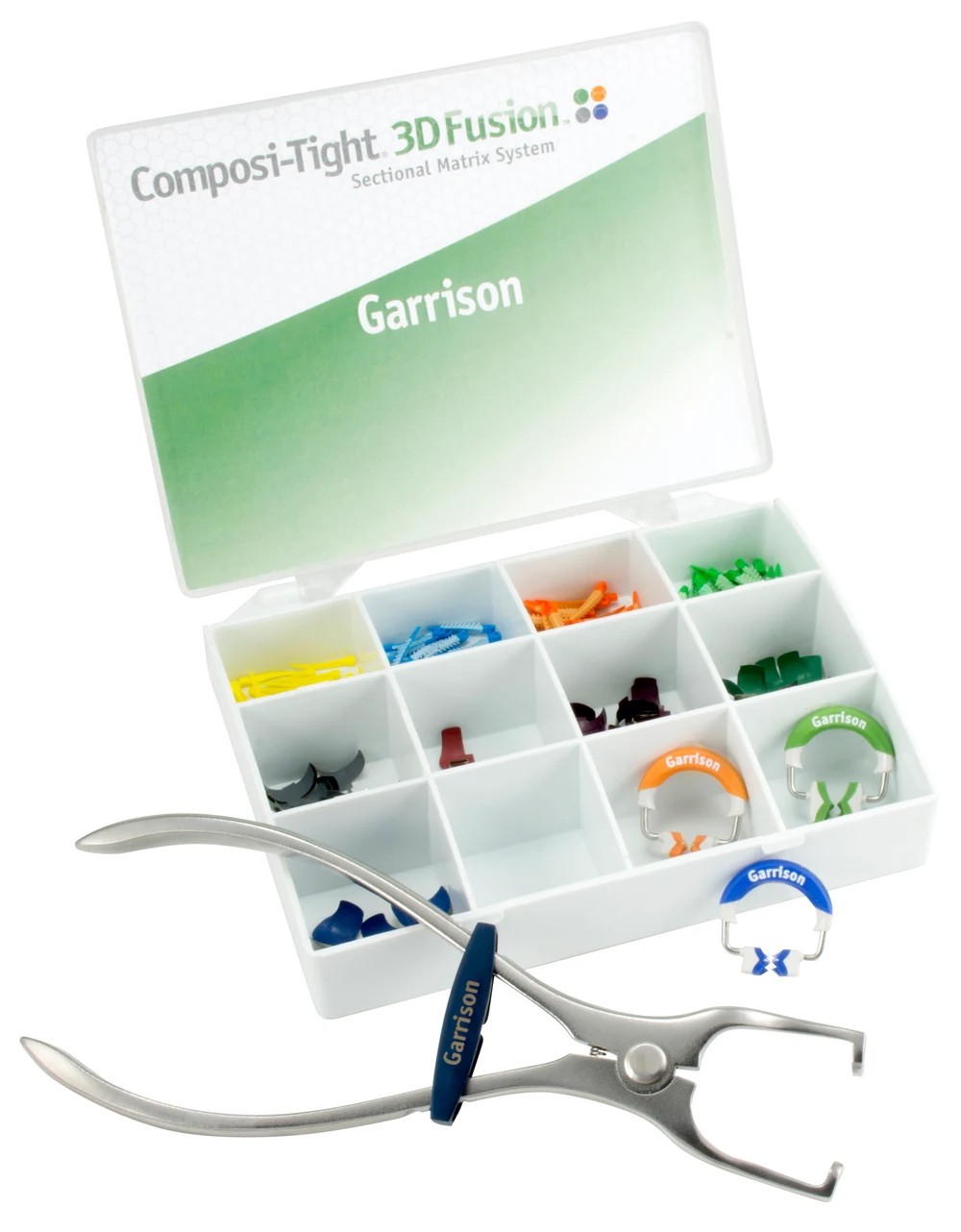
Pre-contoured sectional bands and circumferential bands deserve separate inventory entries — their form and retention arrangements differ. Keep approved alternatives explicit. The buyer isn’t deciding which form suits a patient; the buyer is delivering the form the clinician approved. Same rule for coated versus uncoated surfaces: a coating claim is a product attribute, not an automatic quality ranking.
Band height still matters after the outer box is gone. Assortments are fine for first-time organisation, but an assortment name can’t tell the stock controller which individual refill ran out. Store unopened refills in their labelled packs, keep a labelled compartment map for the tray, and photograph the map so a new assistant can count stock without memorising band shapes.
Wedges, rings and forceps form a separate compatibility problem
A wedge supports band adaptation and retention, and its material, shape and size assortment are purchase fields of their own. “Plastic wedge” is not a specification. In the Garrison Fusion range, the wedge combines a firm core with a soft outer shell and flexible fins. That’s a physical product distinction — and it doesn’t license borrowing another system’s cleaning instructions for it.
Identify a separator ring by system and exact variant, and treat the ring, its placement forceps and any replacement components as connected inventory. The Composi-Tight 3D Fusion instructions distinguish its dedicated ring placement forceps from general clamp forceps. An order that drops the dedicated instrument line leaves the kit operationally incomplete.
Reprocessing status is component-specific. Fusion bands and wedges are single-use disposable items; the rings carry their own cleaning and steam sterilization requirements; and Fusion wedges must not be autoclaved. Keep these differences in a component register that purchasing and sterilization can both read. One reuse label for the whole kit is how wedges end up in an autoclave.
Separate glass ionomer from flowable composite
Glass ionomer needs its full product identity. GC Fuji IX GP EXTRA is a self-cured packable glass ionomer restorative available in capsule presentation. “Fuji,” “glass ionomer” and “cement” are all insufficient as purchase descriptions. The approved version, shade and delivery format travel together through quotation, order and receipt.
Capsule presentation brings an equipment check: confirm the clinic has the matching mixing and application equipment before treating the box as ready-to-use stock. A powder-and-liquid order has different accessory requirements and a different counting method. Keep the formats apart even inside the same brand family — powder from one product and liquid from another is not a substitution, it’s a mix-up.
Flowable composite needs the same precision. GC G-ænial Universal Injectable is a specific named injectable restorative; it doesn’t merge into another GC flowable entry just because both arrive in syringes. Record product, shade, syringe or unit-dose presentation, replacement tips and unopened pack identity. The dentist approves the material’s role; purchasing maintains the approved product and its compatible supplies.
Neither the word “flowable” nor a filler description establishes equivalence to a paste composite. Viscosity, handling and stated uses belong to the specific product. Decline quotes offering “any high-filled flowable” in place of a named item; a proposed replacement triggers a fresh review of instructions, shade availability and dispensing equipment before its stock entry goes live.
A purchase object table for the toolkit
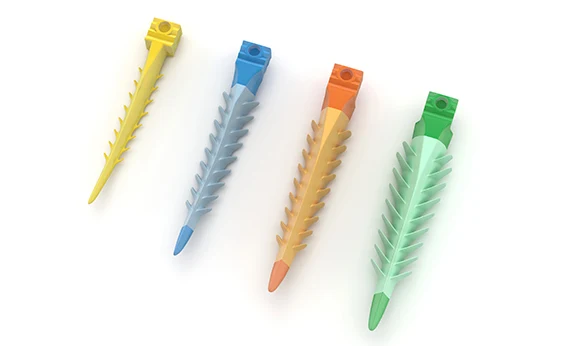
Garrison Fusion wedge assortment.
| Purchase object | Identity that must appear on the order | Companion check | Receipt evidence |
|---|---|---|---|
| Sectional matrix refill | Approved system, band reference, height, contour and surface | Existing ring system and tray compartment map | Labelled sealed refill pack |
| Wedge refill | Approved product family, size assortment and material | Ring seating and approved band combination | Pack label and size map |
| Separator ring | System and exact ring variant | Matching placement forceps and reprocessing instructions | Variant label and instrument identity |
| Placement instrument | System-specific forceps model | Replacement and servicing route | Model label and intact mechanism |
| Glass ionomer restorative | GC Fuji IX GP EXTRA if approved; shade and capsule format | Capsule mixer and approved applier | Product version, lot and expiry |
| Injectable composite | GC G-ænial Universal Injectable if approved; shade and format | Correct tips and adhesive documentation | Name, shade, lot and expiry |
Use this table to request item-level quotations. The examples identify separate objects; they don’t define a clinical combination or endorse a restoration technique. A clinic running another approved brand applies the same fields to that brand’s own products.
Mistakes that hide in a complete-looking quotation
The first is an oversized starter kit with the wrong replenishment plan. The assortment looks impressive while the clinic keeps running out of the one band it actually uses. Count usage by refill identity, not by kit. A ring is a reusable asset with a condition record; a disposable band follows a different replenishment rhythm.
The second is a description where everything is “compatible.” Compatible with which system, which component, which instruction? A ring’s brand doesn’t identify band height, and a familiar syringe doesn’t identify its replacement tips. Compatibility claims should name products in writing. Anything unresolved stays an open purchasing question — it doesn’t get promoted to a stock fact.
Third, don’t let promotional performance claims become acceptance criteria. A receiver can inspect a reference, packaging condition, pack count and supplied accessories. A receiver cannot certify a clinical outcome from a delivery note. Acceptance is built on observable product identity and the documents the clinical team needs.
Turn a starter kit into a refill map
Ask the supplier to return the band assortment as a list of individual references, each with its stated contour and height and the tray compartment that will hold it. That’s what makes a refill quote useful after the starter box is empty. A quote repeating only the kit name can’t tell you whether a missing curved band is sold separately.
For wedges, request the product’s own size and colour map. Colours identify sizes within a named range — they don’t transfer across brands. Keep wooden wedges and finned wedges in separate rows even if staff call both “wedges,” and when the offered box is an assortment, distinguish its mix from a box of the single requested refill size.
Compare ring offers by exact variant and by the placement forceps included. Ask whether replacement tines or service parts exist for that variant, and file the actual answer. Don’t graft a part from a similar-looking ring onto the order. A kit photo shows ring and forceps together; the labelled contents list is what establishes what will ship.
Receive the tray contents and restorative formats separately
At receipt, leave band refills in their labelled packs while matching them to the compartment map. Compare the supplied band form against the approved item description without tearing open packs just to count an assortment. Record damaged packs and unexpected forms before anything moves into unlabelled drawers — once refills are mixed, an invoice can’t reconstruct their identities.
The ring’s asset record carries its variant, placement instrument and component-specific reprocessing document; band and wedge entries carry their disposable status. This split keeps the sterilization team from inheriting the kit as an undifferentiated pile of metal and plastic, and keeps a reusable ring’s maintenance history out of the consumable count.
For Fuji IX GP EXTRA capsules, verify the named version and shade on the box, then match the capsule format to the clinic’s mixer and applier record. For G-ænial Universal Injectable, check whether the shipment contains syringes or unit-dose material and which dispensing accessories were ordered. A shelf count of “composite boxes” hides both a shade shortage and a missing tip pack. Keep those fields visible on the shelf label.
Matrix and restorative order checklist
- List each band reference with contour, height and surface description.
- Attach the selected wedge range’s own colour and size map.
- Name the ring variant and its matching placement forceps.
- Separate disposable bands and wedges from reusable ring assets.
- Specify Fuji IX GP EXTRA version, shade and capsule presentation where approved.
- Identify the injectable composite presentation and matching dispensing accessories.
- Match labelled refills to the tray compartment map before unpacking.
Orthentra handles China dental sourcing at a transparent 3% service fee. Send us your band refill map, wedge assortment and ring-forceps pairing alongside the approved glass ionomer and composite presentations, and we’ll quote it line by line — kit contents broken out, no assortment mysteries.