Implant healing components: distinguish the cap, screw and abutment
A request headed “healing cap” is a purchasing problem before any supplier has quoted. The term can hide an implant-level healing screw, a cover screw, or a component that fits a Multi-Unit abutment. A similar shape or a shared brand name resolves none of that. The order needs the component’s system, connection level and exact reference.
Begin with the implant record and the clinician’s approved component request. Purchasing doesn’t decide the healing approach or select a component for tissue conditions — its task is to obtain the exact object requested and preserve the evidence linking that object to the installed system. That matters most when the clinic runs several implant families from the same manufacturer.
Axiom is a family name, not a complete interface
Anthogyr Axiom documentation distinguishes Bone Level, Tissue Level and Multi-Unit components. Keep the relevant level in every stock name. A line labelled only “Axiom healing component” leaves the receiver interpreting a family that contains different component types; the approved reference must identify the actual interface.
Axiom REG/PX connection design, healing screw form and restorative components are separate identification groups. That information helps recognise the clinic’s legacy inventory — it should not be extended to every later Axiom product. A purchasing record for an older installed implant needs its own current compatibility confirmation.
A shared emergence description doesn’t prove a shared connection. External diameter and the attaching interface are different fields. Keep system identity and component reference visible even when the external dimensions match a familiar part: a bag of visually similar components is nearly impossible to inspect once the labelled outer packs have been mixed.
Cover screw, healing screw and cap are separate objects
An Axiom BL cover screw and an Axiom BL healing screw occupy separate component listings. Use those exact product terms when they are the approved objects — “cap” is too broad to preserve the distinction. Have the clinician confirm the intended component name and reference before a supplier interprets the request commercially.
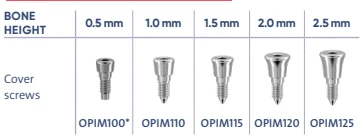
Multi-Unit healing caps are another defined category: their connection is to the named Multi-Unit arrangement, so they don’t merge with implant-level healing screws in the stock system. The order states the relevant platform and the exact cap identity. A family photograph showing several components establishes nothing about which one is being delivered.
A restorative abutment has a different product identity from a healing component as well. Temporary abutments and definitive restorative components belong to their own approved lists. An order for a healing screw doesn’t become an abutment order because both exist under the same implant brand — clarifying the request is part of completing the specification.
Read dimensions as independent fields
External diameter, gingival height and coronal height stay separate. In Axiom component descriptions, Gh identifies gingival height and Ch identifies coronal height. Preserve those labels exactly; a supplier line saying only “height” fails to say which dimension is being quoted.
Never reconstruct a reference from remembered dimensions. Ask for the manufacturer’s actual component reference and the matching label. Dimensions support identification, but the reference is what connects the order to the intended commercial object. If a supplier proposes a new reference, request its documented relationship to the approved system before accepting it.
One concrete identified example: OPHS430 is an Anthogyr Axiom BL REG/PX/X3 healing screw listed with an external diameter of 4.0 mm, gingival height of 3.5 mm and coronal height of 2 mm. Keep its complete current product description with the reference. Those values identify that product — they are not guidance for selecting a healing component for a patient.
Marking and packaging provide different evidence
Head markings help identify an instrument-sized component, but the sealed pack carries the commercial reference and traceability information. Keep both in the receiving record where practical. A head marking never replaces lot, supplied status or expiry information. Record which label belongs to which component before anything enters the storage compartment.
Sterile Axiom healing screw entries need their own supplied-status check: current documentation must confirm the status of the exact ordered product. Don’t carry a family-level statement into a component without reading its label and instructions — in a mixed implant inventory, some prosthetic components carry different supplied statuses.
Packaging condition belongs in acceptance. The receiver should be able to confirm the ordered reference matches the sealed package and that the package is intact, with opened or damaged packages routed through the clinic’s defined receiving process. A component does not become acceptable by shape-matching after its packaging evidence is gone.
Keep third-party claims explicit
A quotation described as “compatible with Axiom” must identify who manufactures the component and the exact interface claimed. A third-party component is not described as an original Anthogyr part. Put the claim, the proposed product and its supporting documentation in front of the clinic’s responsible reviewer together.
External resemblance, a nominal diameter and a broad compatibility list are insufficient purchasing fields. Require the exact implant family, platform, component level and reference. A claim that stays unresolved stays a purchasing question; the stock record holds confirmed approved identity, not a compatibility slogan.
The distinction also protects reordering. A clinic that approves a specific third-party component needs that manufacturer’s own reference and documentation in its item master — reordering by the original manufacturer’s nickname produces a different supplier interpretation each time. Preserve the approved commercial identity so the next buyer repeats the actual order.
Procurement object table
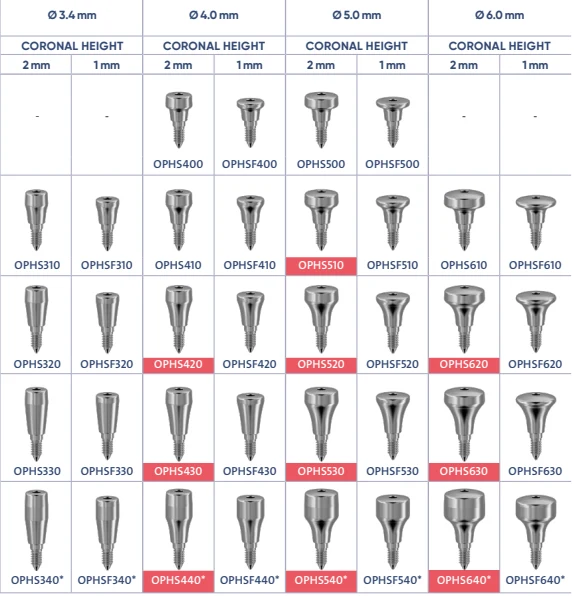
Anthogyr Axiom BL healing screw reference and dimension table.
| Purchase object | Identity required on the order | Critical distinction | Receiving evidence |
|---|---|---|---|
| Axiom BL cover screw | Exact Axiom BL reference and supplied version | Cover screw versus healing screw | Sealed reference label and lot |
| Axiom BL healing screw | System family, reference, external diameter, Gh and Ch fields | External dimensions versus connection identity | Pack and marking mapped to the same item |
| OPHS430 example | Anthogyr Axiom BL REG/PX/X3, OPHS430; 4.0 mm diameter; Gh 3.5 mm; Ch 2 mm | Identified product only, selected by clinician | Exact current product label |
| Tissue Level component | Named Axiom TL platform and component reference | TL versus BL interface | Platform-specific pack identity |
| Multi-Unit healing cap | Exact Multi-Unit platform and cap reference | Abutment-level cap versus implant-level screw | Label with component level |
| Temporary abutment | Approved system, interface and exact abutment reference | Temporary restorative object versus healing component | Complete labelled component set |
| Third-party component | Actual manufacturer and reference plus approved compatibility evidence | Compatible claim versus original brand identity | Supplier label and approved review record |
Complete the table from the clinician’s approved request and the implant record. It’s a component identification tool, not a guide to choosing diameter, tissue height or surgical approach. A buyer should be able to reproduce the approved order without interpreting those clinical decisions.
Mistakes that lead to an unusable component drawer
The first is a generic tray compartment headed “healing abutments” holding different interfaces. Use separate labelled entries for the approved component categories and keep outer pack labels available until each component is assigned through the clinic’s traceability process. That lets staff identify a low-stock item without guessing from a tray photograph.
The second is compressing all heights into one inventory field. Preserve the dimensional labels from the actual product, and have the supplier correct an ambiguous quote before purchase rather than expecting the receiver to clarify it after delivery. The commercial description should match the clinical request’s approved reference.
The third is treating catalogue editions and legacy names casually. Editions change; confirm the current reference before ordering. When a supplier proposes a superseded item or a replacement, obtain an explicit current product relationship. Don’t silently relabel an old stock entry as a new generation because the brand and visible shape look familiar.
Keep the connection level on every quoted component
Ask for an itemised implant-component quote that repeats the implant system and connection level beside each reference, separating implant-level healing screws from components intended for abutment-level restorative arrangements. Where a supplier uses “cap” as a commercial description, require the actual component name and reference — a short nickname cannot identify the interface the clinic needs.
For an Axiom BL healing screw, preserve external diameter, Gh and Ch as separate fields rather than flattening them into one height. The OPHS430 example carries an external diameter of 4.0 mm, Gh of 3.5 mm and Ch of 2 mm: three distinct labelled dimensions. The clinician selects the required dimensions; purchasing reproduces the approved reference and verifies the associated dimension row.
Don’t map an Axiom TL request onto an Axiom BL reference because the components look alike in a photograph. Temporary abutments, cover screws and healing components each require their own inventory category with its actual connection description. The supplier’s response should identify the precise object — not offer a bag of components under a broad system name.
Receive references while the packs remain identifiable
Match each component’s pack label to the system and reference on the order, and keep its sealed-pack identity with lot and supplied-status information until the clinic’s traceability process takes over. The receiver does not open an unfamiliar component to test fit — physical trial is no substitute for an approved reference relationship.
A driver request belongs beside the component reference: ask for the specified driver identity and confirm the clinic has it or has ordered it. “Implant screwdriver” carries no usable interface information. The receiving team reconciles driver references and supplied accessories; any tightening specification comes from the exact component’s current instructions.
Organise the storage record by system, connection level and component type, keeping the separately labelled dimension fields inside the healing components. Cover screws and temporary restorative parts live in their own mapped compartments. This turns the next refill into a reference-based order instead of an attempt to identify a small metal object by appearance. When a catalogue reference changes, preserve both the old identity and the manufacturer’s documented replacement relationship for reviewer approval.
Implant component order checklist
- Repeat the implant system and connection level on each item line.
- Replace the nickname cap with the actual component name and reference.
- Separate cover screws, healing screws and temporary abutments.
- Preserve external diameter, Gh and Ch as separately labelled fields.
- Verify OPHS430 against its Axiom BL catalogue row when that reference is approved.
- Identify the specified driver and required companion components.
- Reconcile sealed pack identity, lot and supplied status before storage assignment.
Orthentra sources from China at a transparent 3% fee. An implant-component enquiry works best with the approved system, connection level, exact reference and dimension row attached — plus the driver identity — so the sourcing conversation stays unambiguous from first quote to refill.