Micro-veneer gap closure: a material list the purchasing team can use
“Micro-veneer materials” is a request the purchasing team cannot act on. It can mean composite for fabrication, impression or index materials, bonding products, isolation supplies, polishing consumables — or a bundle of all five. A supplier’s kit photo is not a substitute for a material list approved by the dentist who owns the workflow.
The useful starting point is a map of objects. The clinician defines the restorative approach and the required materials. The buyer converts that approved list into specific products, formats and companion accessories. Questions about a patient’s gap stay with the clinical team; the assistant gets a list it can actually prepare and replenish.
Keep fabrication materials separate from bonding materials
The ceramic used to fabricate the definitive micro-veneer, the composite used for planning or a provisional, and the product used to bond the ceramic are three separate purchase objects. Even when two of them share resin chemistry and syringe delivery, their names, approved uses and instructions differ. Write the definitive ceramic and shade on one line, the approved planning or provisional composite on another, and the complete luting or bonding system on a third. A generic “veneer resin” quotation asks the supplier to make a distinction that belongs to the clinic.
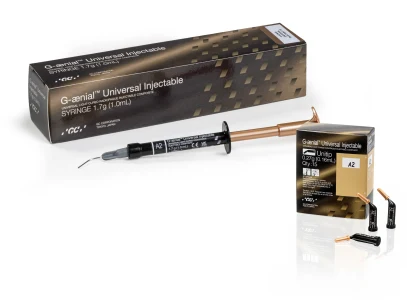
Delivery form matters as much as brand family. A syringe, a capsule and a unit-dose adhesive create different stock-counting, dispensing and contamination-control arrangements. Record the format the clinical team approved, and check whether matching dispensers and tips come with the starter set or sell separately. A refill photo should show the refill’s own label, not an illustration of the larger kit.
Feldspathic powder fabrication and a pressed glass-ceramic ingot are different laboratory orders. Specify the approved ceramic system, shade, optical designation and fabrication format, and require the laboratory to confirm that the supplied restoration matches that identity. A finished micro-veneer should arrive with a clear material record.
IPS e.max Press MT is a named Ivoclar press ingot; MT identifies Medium Translucency. When the clinical and laboratory teams approve it, preserve that complete identity. Don’t swap a Press request for a similarly named CAD block, and don’t let an opacity nickname stand in for the whole specification. “Flowable,” likewise, is a handling description — not universal permission to use a restorative composite as a luting material.
Shade and optical identity should not vanish inside the phrase “natural colour.” Keep the manufacturer’s shade name, translucency designation and exact version intact. Different product families use different shade systems, and the purchasing record should preserve what was approved, including any written restriction on substitution. That way staff can tell an ordering error apart from a clinical shade question.
Treat bonding as a system of named products
An adhesive bottle is not the whole bonding inventory. Have the clinical team list the approved adhesive, any primer or activator, dispensing dishes, applicators and surface-treatment accessories — marking which supplies are mandatory for the approved combination, and which items the clinic already owns so the new order doesn’t create an incomplete duplicate system.
GC G-Premio BOND is a single-component light-cured adhesive sold in bottle and unit-dose presentations. Those are two different stock objects, not two counts of one. If the clinic changes presentation, update the preparation list and consumption record — don’t just change the pack count on the next invoice.
Compatibility lives at the product level. A label reading “universal” does not waive the check of the approved pairing, including any separate silane or activator. Collect the current documentation for the complete named combination. Application, surface treatment and curing decisions belong to the trained team working from those instructions.
The planning, impression and isolation group
The list also needs everything used before bonding. An approved index or impression material has its own base-and-catalyst presentation, dispensing gun, mixing tips and tray requirements. Don’t substitute a material because the colour or cartridge silhouette matches; record the exact product and consistency, then confirm the dispenser arrangement from the product documentation.
Isolation supplies deserve a visible group of their own, not an assumption that the clinic “already has everything.” Inventory the approved sheet material, frame, clamps and other requested accessories, plus the reusable instruments needed to prepare them. Their presence here is an operational completeness check, not a clinical instruction.
Keep workflow consumables in a labelled storage location. If an impression cartridge is shared with another procedure, the stock record should show shared ownership and the correct mixing-tip identity — otherwise a tray gets prepared from a photograph while the cartridge’s real companion tips sit in another drawer. The assistant needs a preparation list that matches what is actually on hand.
Finishing is more than a polishing paste
Finishing discs, interproximal strips, rotary polishers and polishing paste are distinct products. Specify the approved abrasive system, grit identification, shape and matching mandrel — a refill box of discs does not necessarily include one. Check that detail before accepting a large disc order as a complete polishing set.
Keep composite-finishing supplies separate from the polishers approved for the definitive ceramic. A composite disc system says nothing about ceramic compatibility. Have the dentist identify the ceramic polisher family, shape and handpiece interface, and preserve each system’s own colour and grit designations in the tray map. A “fine red disc” order without its product family gives the receiver nothing to check.
Interproximal access is its own stock group: a disc and a strip are not the same object, and a paste replaces neither. Count the consumables that are actually consumed, and keep reusable instruments under a separate maintenance record. That tells purchasing what the workflow adds to ongoing demand.
Build the order around observable objects
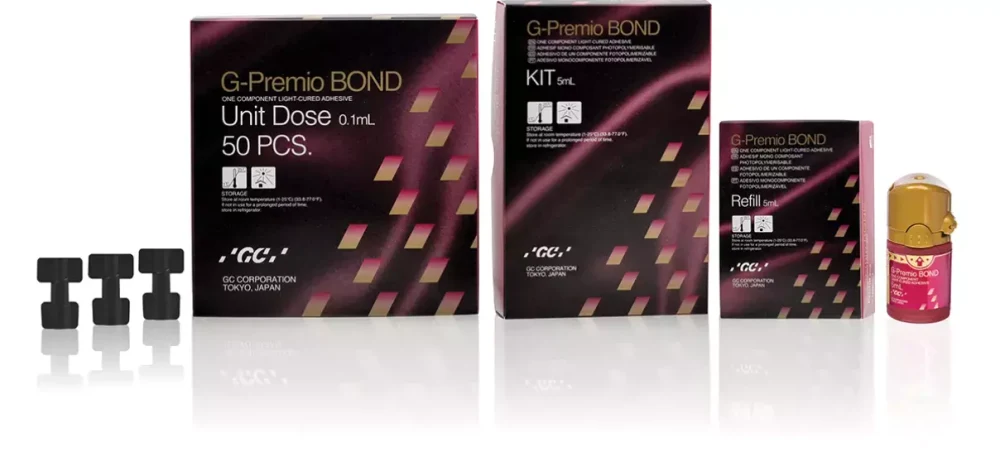
GC G-Premio BOND packaging and bottle.
| Purchase object | Exact order fields | Accessory dependency | Acceptance evidence |
|---|---|---|---|
| Definitive ceramic | Approved ceramic system; IPS e.max Press MT only if approved; shade and fabrication format | Laboratory material record and approved luting system | Named ceramic and laboratory confirmation |
| Planning/provisional composite | Approved full product, shade and format | Matching dispenser or tips | Sealed pack identity |
| Luting material | Clinician-approved system and exact paste presentation | Compatible primers and dispensing supplies | Complete named set and current instructions |
| Adhesive | G-Premio BOND only if approved; bottle or unit dose | Applicators, dishes and any approved companion products | Labelled product and presentation |
| Impression or index material | Approved product, consistency and cartridge identity | Matching gun and mixing tips | Cartridge and accessory labels |
| Isolation supplies | Approved objects and replenishment format | Reusable frame and instruments | Pack identity and condition |
| Finishing discs and strips | Approved system, grit, size and abrasive face | Matching mandrels | System-specific refill label |
| Rotary polisher or paste | Approved material-specific product | Handpiece interface or application tool | Named object and instructions |
This table is an order specification, not a procedure. Fill it from the clinician’s approved workflow before requesting prices; every empty identity field is unfinished preparation. Keeping the clinical decision apart from the commercial description is what makes the completed order inspectable.
Avoid a veneer kit that conceals substitutions
The classic quotation problem: one kit name, one photo of several products. Require an itemised content list identifying the restorative, adhesive, luting and polishing products separately, with quantities and formats. An attractive kit image cannot tell the receiver whether the shipment contains the same versions.
The second problem is a newly launched composite swapped in while the old adhesive and preparation sheet stay put. Product availability is a purchasing question; a new clinical combination is not. Put the proposed replacement next to the original entry, with its own instructions and accessories, and activate it only when the responsible reviewer has approved the actual combination.
Third, keep the preparation list current when a pack or presentation changes. A bottle replaced by unit doses, or an assortment replaced by a refill, changes what the assistant retrieves. Update the inventory name and tray list at receipt, or the next appointment will be prepared from an obsolete picture.
Give the laboratory and purchasing team different lists
The definitive ceramic order belongs with the laboratory prescription: named ceramic, shade and translucency designation exactly as approved, together with the laboratory’s supplied restoration identification. The planning composite belongs on the clinic’s materials list. Filing both under “veneer material” creates purchasing ambiguity even when everyone recognises the intended restoration.
For IPS e.max Press, preserve the selected ingot identity rather than ordering by the e.max family name. MT means Medium Translucency — a product identification field, not a direction to change the prescribed translucency. If a laboratory quote substitutes a different material or designation, that proposal goes back to the clinician before purchasing releases it.
A try-in paste and a resin cement also need distinct lines. Record the approved cement system and its associated try-in product as a named pair; a matching colour word on an unrelated paste does not make them partners. Keep the supplied shade chart with the pair so the assistant retrieves approved objects instead of translating laboratory shorthand into purchase references.
Check the finishing order against the material being finished
A finishing kit should name the substrate it serves. Ask the clinician which ceramic finishing and polishing products the definitive restoration needs, and keep composite finishing supplies attached to the planning or provisional material entry. A kit marketed for composite does not become a ceramic kit because both sit on the same appointment tray.
At handover, match the ceramic restoration’s documentation to the laboratory order, and match the chairside adhesive and luting packs to their own supply list. For bottled adhesive, preserve product name, lot and expiry; for unit-dose, keep the outer pack identity until stock is assigned. Record dispensing tips and application brushes as real consumables — don’t assume they arrive with every refill.
If an injectable composite refill arrives in a different presentation, check the dispenser requirement before it moves to the planning tray. The definitive ceramic, the planning resin, the luting system and the polishers all have separate refill routes. Tracking them separately gives the next order a precise starting point and prevents replenishing a laboratory material when the actual shortage is a chairside accessory.
Micro-veneer material checklist
- Preserve the definitive ceramic and its approved translucency designation.
- Keep planning or provisional composite outside the definitive ceramic line.
- Name the selected adhesive, resin cement and associated try-in product.
- Verify the approved surface-treatment products for that ceramic.
- Identify ceramic polishers separately from composite finishing supplies.
- Match syringes, unit doses, tips and application brushes to their own refills.
- Reconcile the laboratory restoration record with the prescribed material before handover.
Orthentra sources from China at a transparent 3% service fee. For a micro-veneer workflow, send us the laboratory material prescription plus a separate chairside list — planning, adhesion, luting and material-specific finishing — and we’ll quote each object by name, not by bundle.