Warmed composite: when the handling workflow justifies a purchase
A composite warmer is an equipment purchase with a material dependency. What the clinic is actually buying is a way to change the handling of an approved material in an approved delivery format — which means the purchase only makes sense when four things are named: the composite, the warming device, the application equipment and the instructions connecting them. A general promise of stronger restorations is not a purchasing specification.
Write down the handling problem first. Dispensing resistance, the preferred delivery format, the transfer between warming and application — whatever the clinical team wants the equipment to solve. Keep that request separate from claims about curing, longevity or patient outcomes. The purchase is ready for review when the material-and-device combination is explicit.
The composite and the warmer are a paired specification
“Paste composite” on a stock card is not automatic approval for warming. Get the exact material name and version, its supplied format, and the warming instructions that apply to it — then match those instructions against the selected device. A proposed combination with no documented approval stays an open question, not a stock fact.
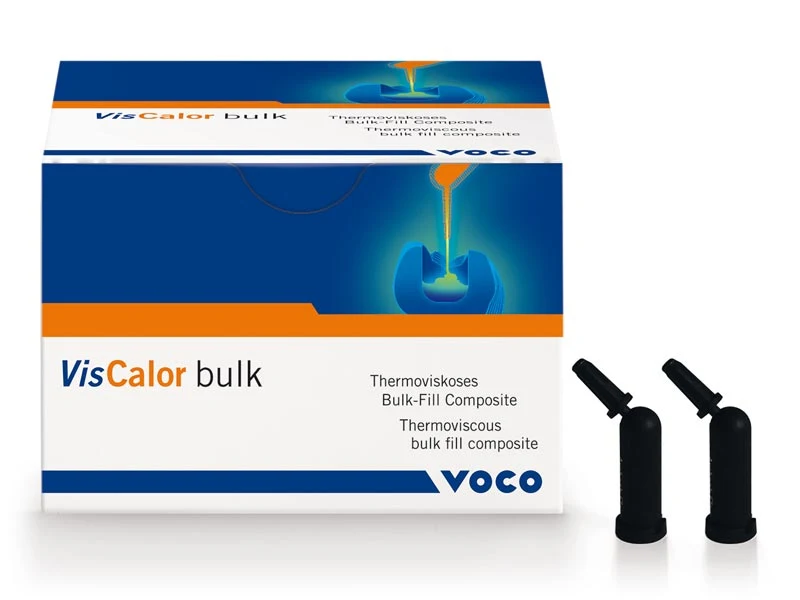
VOCO VisCalor bulk is the clean example: a restorative material designed for prewarming, flowable when warmed and sculptable again as it cools. Those are product-specific handling features. They do not turn every conventional composite into its warmed equivalent, and they do not authorise an indirect luting workflow for the same material.
Keep intended use visible in the stock record. A restorative composite and a resin luting cement remain separate product identities even when the dentist discusses both around one indirect restoration. Purchasing should not swap an approved cement line for a warmed restorative because the delivery looks convenient — the responsible clinician approves the named application and material combination.
Capsule and syringe formats create different equipment needs
A warmer built around capsules does not answer a syringe request. Dimensions, holders, dispensing arrangement and cleaning instructions all depend on the specific product and device. Record the manufacturer’s exact delivery term — Caps, syringe or another unit-dose presentation — and keep that term on the order and the storage label.
The warming holder and the application device need separate identification too. A clinic running a stationary capsule warmer needs the approved applicator and a practical storage location for it; a combined warming dispenser is a different equipment arrangement. Describe the selected arrangement clearly enough that the receiving team can verify every part arrived.
And a familiar-looking capsule is not automatically compatible with every dispenser. Ask for product-level confirmation, including any changeable top or holder. “Fits dental capsules” is not an acceptance criterion — the device’s own instructions and the material’s instructions should both identify the proposed use before the order is approved.
Understand what the selected device actually supplies
VOCO VisCalor Dispenser combines warming and application in one device, using near-infrared warming, with programmes for VisCalor bulk and additional VOCO composites. Treat that programme description as a documentation requirement: obtain the actual supported-material list and programme instructions for the device being purchased. “Additional composites” does not translate into unrestricted cross-brand compatibility.
The dispenser, its changeable tops and its protective sleeves are separate commercial objects, with refill references that belong in the device record. The clinic needs a plan for replacing sleeves and maintaining the tops under the supplied instructions. A photograph of a working dispenser proves nothing about whether the quoted starter pack includes every accessory.
A stationary warmer raises different questions: which capsule holders are included, which approved materials they support, how the unit fits the preparation area. The clinician and assistant should review the transfer arrangement together; purchasing then orders the approved applicator, storage accessories and replacement parts without inventing heating protocols.
Transfer and workspace are procurement questions
The distance between warming and delivery changes the working arrangement. Where will the device sit, who retrieves it, where do the accessories live? That is an equipment-placement discussion — not a reason to alter the material’s heating instructions. A device that blocks the preparation bench or lacks a suitable power arrangement creates friction nobody ordered.
Compare equipment proposals against the actual delivery process. A combined dispenser removes a device exchange; a separate warmer offers a different preparation arrangement. Neither description is a recommendation for any patient’s restoration. The decision rests on the team-approved workflow, supported product compatibility and service requirements.
At handover, ask the supplier to demonstrate the supplied device with the approved material format — controls, supported programmes, accessories, maintenance documentation — and record which configuration was demonstrated. A promotional video does not confirm that the local shipment contains the same hardware and accessory set.
Curing information belongs to the exact material
Warming does not remove a composite’s light-curing requirements. The clinic needs current instructions for the material and the light-curing equipment it uses; procurement collects those documents and identifies the light device model so the clinical team can check the approved combination. A warmer’s performance slogan is not a substitute for that review.
Keep demonstration temperatures, durations and increment claims out of the general purchase specification. Those values belong to the exact product’s operating instructions and professional use. A buyer requests the correct manuals and programme identity — a buyer does not print a new clinical protocol on an equipment checklist.
The same holds for efficacy claims. Improved handling is a concrete, documentable feature of a named product. Claims of stronger bonds, better curing or longer restoration life need their own evidence and are not required to establish what the purchase object is. The order describes the device, material and accessories the team approved.
Procurement object table
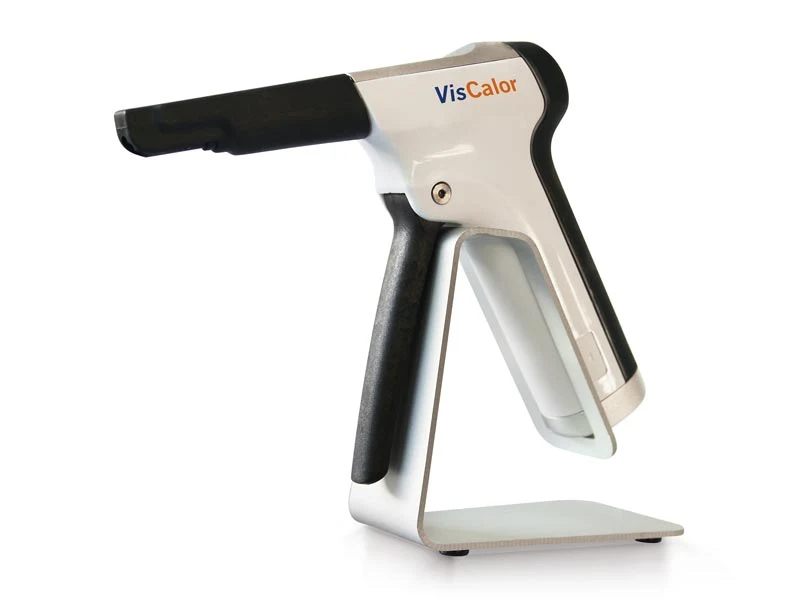
VOCO VisCalor Dispenser.
| Purchase object | Exact order identity | Required dependency | Receiving evidence |
|---|---|---|---|
| Restorative composite | Approved product, version, shade and Caps or other format | Documented warming approval for that material | Sealed pack name, lot and expiry |
| Combined warming dispenser | VOCO VisCalor Dispenser if approved; exact regional configuration | Supported material and programme documentation | Device identity and complete accessory list |
| Stationary warmer | Clinician-approved manufacturer and model | Approved holder, material and applicator | Supplied holder configuration and instructions |
| Changeable top or holder | Device-specific refill identity | Exact warmer or dispenser | Labelled accessory and fit confirmation |
| Protective sleeves | Approved device-specific product | Dispenser dimensions and maintenance workflow | Refill label and unopened pack |
| Application equipment | Approved applicator for the chosen format | Capsule or syringe interface | Model and compatible material identity |
| Light-curing documentation | Clinic device model and current material instructions | Clinical compatibility review | Document versions kept with equipment record |
Don’t fill this table with a target temperature borrowed from another composite. Fill it with named objects and the evidence connecting them. Once the clinical team approves the complete arrangement, procurement can compare suppliers on the same configuration.
Mistakes that make a warmer purchase difficult to use
The first is selecting the device before identifying the approved material format. The clinic receives a warmer while stocking a presentation that lacks the required holder or approval. Resolve the material identity first and make its format part of the quoted configuration — cheaper on paper than after receipt.
The second is confusing a device programme with a material recommendation. A warmer supporting several products does not decide which product belongs in the clinic’s workflow. Keep the approved material list under clinical ownership, preserve programme mapping in the equipment record, and route proposed additions through documented review before they enter routine stock.
The third is importing repeated-warming assumptions from a general demonstration. Instructions differ between products, including restrictions attached to the delivery unit and the selected device. Obtain the exact instructions and train the responsible team from them. Procurement supplies the approved configuration and keeps replacements available; it does not author a substitute handling protocol.
Build a capsule-to-device register
Before comparing warming equipment, list the approved composite products and their actual presentations — each capsule product as a separate entry from any syringe version in the same family, with the warming device and current compatibility document recorded beside it. This is the concrete way to stop a physically similar capsule from inheriting another material’s approval.
The VisCalor Dispenser combines warming and application through its stated near-infrared design. Quote it as the named device it is, with its supplied charging and accessory configuration — not as though it were a heated storage tray. A holder-based system and a warming applicator involve different objects, and the supplier comparison should show how each proposed configuration holds and dispenses the clinic’s approved presentation.
On the material side, keep VisCalor bulk and other composite identities visible rather than filing every compatible VOCO material under “warming composite.” Device programmes and compatibility apply to specified products, and the purchasing team’s job is to preserve that named relationship while the clinician controls material use.
Check what accompanies the warmer
At receipt, inspect the dispenser model and supplied accessories against the offer, record the power or charging components, and file the instructions delivered with that specific equipment. If replacement protective or application supplies were ordered, identify them as separate stock objects — a functioning dispenser in a photo says nothing about whether the ordered consumables are in the box.
Check the composite packs independently: product name, shade, presentation, lot, expiry, then storage per the instructions. Buying a warming device changes nothing about unopened material storage. Keep the original packaging available for identification before capsules move into a preparation area.
A proposed material replacement triggers review of the compatibility entry: request the new material’s current document and the device’s applicable instructions, and let the responsible clinician approve the pairing. Keep the exact approved device instructions for programme settings. And keep clinical benefit language out of the asset record — the receiving record describes equipment identity, handling features and compatible material formats, nothing more.
Composite warming order checklist
- Name the composite product, shade and capsule or syringe presentation.
- Link each approved presentation to the named warming device.
- Confirm the manufacturer’s compatibility for the exact proposed material.
- Distinguish a warming applicator from a holder-based warming system.
- Itemise charging components and requested replacement accessories.
- Keep material storage instructions separate from device operation documents.
- Return a changed device or material generation for compatibility review.
Orthentra sources dental materials and equipment from China at a transparent 3% fee. For a composite warming purchase, send us your device-material register and the accessory list for the approved equipment — we’ll quote the exact pairing, capsule format and documented compatibility included.